

First home buyer guide for Australians
About this guide
This guide is written by a first home buyer for first home buyers.
This is a step-by-step comprehensive first home buyer checklist I wished I had when I first started property hunting in Sydney, Australia. This is what I wished I had to give me the confidence in finding the right home and reducing the time spent at open home inspections for properties I was never going to make an offer for.
Some of the content is geared towards apartments, however if you are looking to buy a house, villa or townhouse, it is still just as relevant. You may wish to skip some of the apartment specific content as we cover extra variables on what to look for in common areas covered by strata and ongoing costs related to owning an apartment.
The goal is to make this guide a one-stop checklist so you don’t have to have to look at 100 different websites to compile the information you need.
Step 1: Understand your needs and wants when buying your first home as an owner occupier
Ask yourself these questions and write down your answers:
- What is my motivation for wanting to buy property?
- Can I fulfil my motivation by renting instead?
- How long do I plan to live in this property?
- Which suburbs do I see myself living in?
- Do I need to think about amenities and facilities?
- Public transport, schools, shopping centre, parks, beach, gym etc
- Do I want a house, villa, townhouse or apartment?
- Am I willing to buy a fixer upper and spend money to renovate?
- How many bedrooms/bathrooms/study/car spaces do I need?
- What is the max travelling time I can be from public transport?
- Do I want to take advantage of all the first home buyer grants supported by the government?
- This may put a price cap on the properties you can buy and eligibility criterias vary by state
- Have I checked the market price on sold properties based on the criteria I set above and whether I can afford the properties that fit my criteria?
- You may need to go to open home inspections to get an understanding whether the price you are paying is aligned to what you expect to get out of a property
- Do I have an emergency fund on top of my deposit in case I lose my source of income?
- It’s risky to put all your eggs in one basket. Consider having a plan if you purchase a property and lose your job, how you would go about it and how long you can last
If the above is overwhelming to you, the most easy way to get some clarity and talk through your thoughts with a mortgage broker. In Australia, majority of the mortgage brokers don’t charge you for the service.
Step 2: Understanding your financials
Your deposit and extra fees and charges no one tells you
Saving for your deposit is usually the first stage of saving up for a property purchase. A general rule of thumb is to save up to 20% of the property purchase price as a deposit. The benefits of a 20% deposit will help you avoid extra costs such as Lender’s Mortgage Insurance (LMI), and some lenders may also give you a better home loan rate for being at 80% LVR (or lower) which can categorise you as less risky to lend money to.
Make sure you have accounted for all the extra fees and services you will need to account for in addition to your deposit when you first make the offer. As a general guideline in how much additional money you need to save, below is a list:
- Do you need to pay Lender’s Mortgage Insurance?
- Typically you can avoid the LMI cost if you have a 20% deposit of the property price.
- Some lenders can give advantages based on their own unique criteria and will waive the fee for certain professions they may deem safe. Be sure to ask your lender or mortgage broker.
- You can pay LMI immediately, as an upfront cost. Or you may be able to choose to spread it across the term of the home loan. Keep in mind that adding an LMI premium to your loan balance will mean you pay interest on it over the life of the loan. Consult with your broker or lender on the options available with each home loan and lender.
- Stamp duty
- First home buyers can get stamp duty completely waived under a certain purchase price, and may also get concessions on stamp duty. Check your state government websites to know the specific price limits.
- NSW’s government has a stamp duty calculator that you can use if you are looking to buy property in the NSW state.
- For NSW the government has announced that first home buyers purchasing properties up to $1.5 million will be provided the option to pay an annual property tax instead of stamp duty (can also be known as transfer duty).
- Legal fees + disbursements
- Solicitor / conveyancer service fees: In NSW, this can range from $1,200 – $4,000. Prices range depending on the level of experience, complexity of the contract and what extra levels of service you need for negotiations. More expensive doesn’t always mean better, but the same can also be said that you may be rolling your dice to find a good solicitor for the cheaper end of the spectrum.
- Disbursements are additional costs incurred by your solicitor / conveyancer in order to do their job for your specific case. Disbursements are charged above and beyond the general conveyancing service fee. Some will include it into their overall fee but most will likely pass the costs on to you regardless if you actually made the final purchase.
- Property / building inspection report
- A standard property inspection report will cost an average of A$550 and can vary a couple hundred dollars both ways.
- Strata reports
- Buying strata reports or hiring a service to conduct a strata report is a part of the costs of the buying journey. The cost of these reports can average in the range of A$200 to A$400 in NSW.
Tip: Be careful about buying completed strata reports directly from the real estate listing agent or the owner of the property. Not all strata reports are the same and quality and coverage may differ. Choosing to go with a strata report provider purely based on cost can be a risky endeavour for one of the biggest purchases in your life. Try and find reviews on third party websites (e.g. Google Reviews, Trustpilot) to verify if they have a consistent high quality of service.
Find out your borrowing power
You can either contact a bank of your choice directly or speak to a mortgage broker who will guide you and help you through the process and all the paperwork.
Note: In Australia, majority of mortgage brokers don’t charge you for the service. You can read about how mortgage broker make money from the Australian Government website Moneysmart.gov.au/using-a-mortgage-broker
Keep in mind that you don’t need to max out your full borrowing power even if you get pre-approval for the amount and it is important to calculate your monthly repayments and take into account your monthly expenses over your last 3-6 months to know realistically how much you spend over the average of 6 months.
This will allow you to understand whether you are happy with the amount of money left over after paying your monthly mortgage repayments and expenses. Take into account once a year payments and adhoc expenses such as yearly subscriptions, insurances, holidays, and medicine.
Tip: Ask your lender questions such as:
– Are there are any suburbs or post codes you refuse to lend out to?
– Do you lend out to low, medium, high density apartments?
– How do you get paid for the advice you’re giving me? Does this differ between lenders?
– Why did you recommend this loan to me? Why is this loan in my best interests?
– What fees will I have to pay when taking out this loan?
– What features (options) come with this loan? Can you show me – how they work?
– Can you show me a couple more options, including one with the lowest cost?
Calculate monthly repayments
This is a longer process if you do not have your financials organised, but you are about to make one of the biggest purchases of your life, so this part is especially important if you want to avoid the feeling of regret or cold feet during or after the purchase of your new property.
Use home loan repayment calculators and get an estimate of your monthly repayment.
- Go on different big bank websites and find out their home loan rate
- Get the highest home loan rate so you can make more conservative estimates
- Put the loan value into a mortgage repayment calculator
- Repeat this with higher home loan rate percentages so you can understand what will happen if interest rates increase
In the event of interest rate rises, you want to be able to determine at what point you will feel the financial stress of monthly mortgage repayments.
The ongoing maintenance costs
Take into account the ongoing costs of owning an apartment. The key ones you will see are:
- Strata fees: A fee that goes towards the ongoing maintenance of the building
- Council fees: This is a fee that goes towards the local council
- Water rates: This is usually a fixed rate, but may increase over time
- Utility bills: Electricity, hot water and internet
Step 3: Check the news and see if interest rates are rising
If interest rates are rising, it is important to repeat the above process of monthly repayments with multiple home loan interest rate increases. This will help minimise your stress in the future if your loan repayments rise.
Step 4: Research sold properties in each suburb
Before you start travelling to open home inspections, filter on realestate.com.au and domain.com.au for their sold property list for the suburbs in your criteria. Have an understanding of the market value of these homes and whether it aligns with your expectations for the price you may be paying.
It is common practice for these websites in Australia to hide the sold price of a property and ask you to contact them for the price. This is a popular strategy for sales agents to get your information and start the conversation with those in the market to buy property. However don’t let this deter you from calling or emailing, sometimes they can offer valuable insight in properties that may fit your criteria. However, always remember they are trying to make a sale. So they will pitch all the benefits, but not so much of the cons of a property. Be sure to do your due diligence to ensure the property is right for you.
How to assess market value
There are a few ways you can assess whether the property you are about to submit an offer for is comparable to the sold properties. Here are a few factors:
Size of the property
Properties are typically compared on internal sizes by square metres (m2). You can break this down to get the price per square metre to get an idea if you are in the ballpark.
Tip: Ask the listing agent about the internal square metre size of the property
Many apartment listings will quote the total size of the apartment including carpark space and balcony / backyard. Make sure you ask the real estate agent if the square metres they are quoting is excluding the external and carspace.
Features
Have a look at real estate listing websites and you can have a look at what people have been asking to filter for. Here are some examples from Realestate.com.au search filter on what they see buyers in the market are asking for:
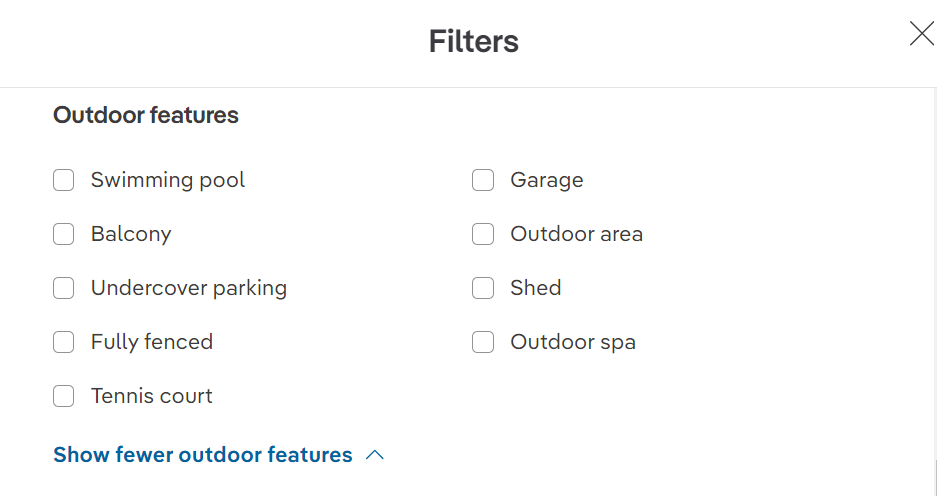
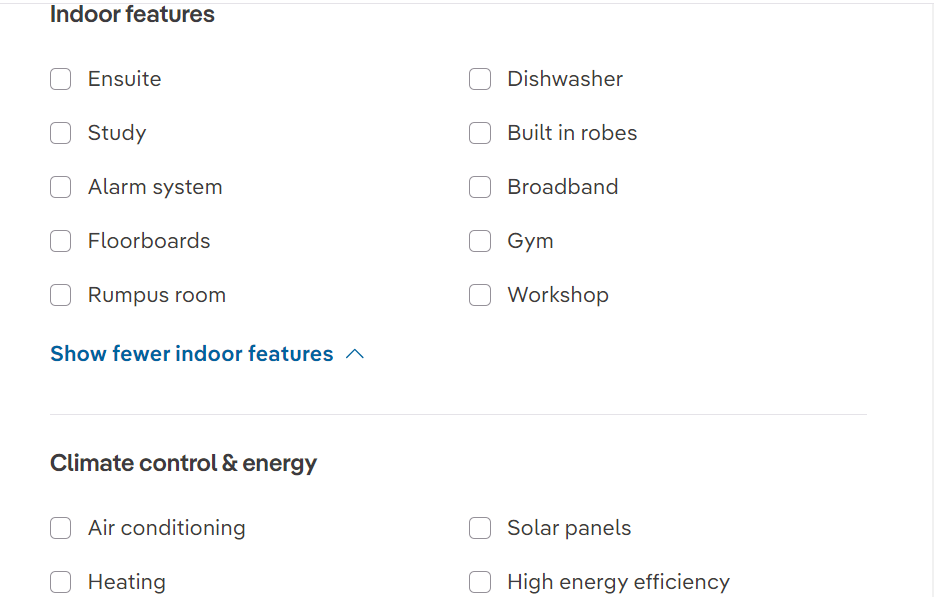
The features can give an indication of what may add value to a property.
Aspect
Natural light is typically impacted by the aspect of the property. Properties that receive more natural light from the sun tends to be more desired and in higher demand.
Views
Properties with an unobstructed view tends command a higher property price. If you are comparing prices of high-rise apartments by which floor it is on. In Australia, an average price increase for the same layout apartment but one floor up, it can increase the price by anywhere between 8k-15k per floor.
Distance to amenities
Proximities to public transports, shops, schools will tend to attract more buyers as convenience and accessibility is a highly desirable factor
Building amenities
Does the apartment block have facilities such as a swimming pool, gym or communal BBQ areas for the residents?
Parking
Properties with at least one car space will attract a larger buyer market. But don’t forget about visitor parking or street parking convenience. If you have an extra car or if you have visitors, you may want to consider the convenience of parking for your guests.
Building age
The older a building, the more maintenance requirements tend to pop up simply due to wear and tear. This will typically mean there is a higher chance of incurring a special levy.
Developer reputation
Developers can play a big part into commanding a higher price. Due to the loose enforcement of regulations during the development stages of new apartment units in Australia. There is a common, and justified worry of what if you get stuck with defects upon completion and the developer’s dissolve or stop communicating. Good developers know this and prices in that premium for their reputation of reliability. If you are buying an off-the-plan apartment, here is a simple guide to assessing the developer’s reputation.
Things to be wary of when looking at property listings
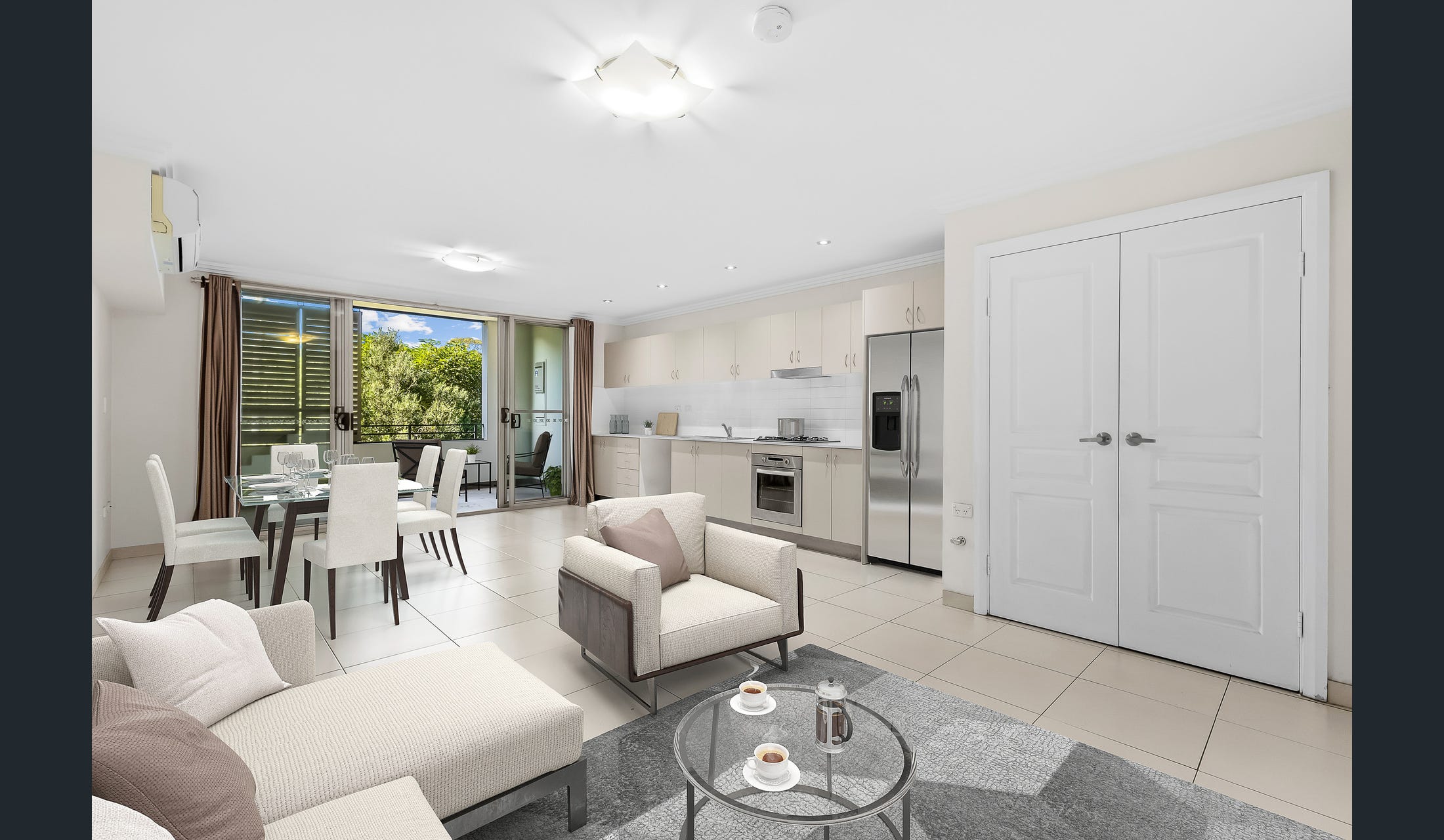
Some real estate listings take photos but then photoshop furniture and decorations onto them. This is usually to hide unpleasant angles and flaws of the apartment and sometimes can distort your depth perception as the furniture is usually not to scale. Approach these ones with care and if you proceed to the inspection, make sure you check things carefully and ask questions. However sometimes the they will show you the non-furnished version and also show you a furnished version using photoshop. These ones are to help you visualise the space. Example below:

The type of apartment changes the way you assess
The way you research and assess an apartment you are interested in can differ depending on the type of apartment you are looking to buy. Find the difference between buying and inspecting an off the plan apartment vs built apartment.
If you are looking at buying a house, townhouse or villa, you can skip on through to the next stages in the buying journey further below.
Explore by type of apartment

Ready to move in apartments
Buying an apartment that is ready for you to move and live in can be a very exciting journey to go on. Make the most of your time at property inspections by bringing along a checklist.

Off the plan apartments
Buying an off-the-plan apartment can be highly risky without doing your due diligence. Be careful of the fancy brochures and understand how you can reduce your risk and enjoy the benefits of a brand new apartment.